the ethical move

Charm pricing + Transparent pricing.

Related Terms:

What it is

Charm pricing is the practice of setting a price just below a round number: €9.99 instead of €10, or 199 instead of 200. While the difference in what we pay is small, the difference in how the price feels can be much bigger.

We tend to associate the tactic with prices ending in .99, but the final digits are only part of it. A price of 199 can do the same work. In both cases, the price crosses into a lower number without becoming meaningfully cheaper.

Charm pricing is one form of psychological pricing, a broad term for presenting prices around how people perceive and compare them. It’s familiar because it’s everywhere, from clothes and groceries to subscriptions and services.

It isn’t magic, and it doesn’t work on everyone in every situation. Research suggests the effect depends on context, attention and how easily we can compare the prices in front of us. But one cent can still change the impression of a price by much more than one cent. That’s what we’re examining here.

How it works

We don’t take in a price as a neutral string of numbers. We read it, compare it, remember parts of it and place it alongside everything else competing for our attention. Charm pricing works within that messy process.

1. The left-digit effect.

When we read from left to right, the first number gives us an early sense of scale. The difference between €2.99 and €3.00 is only one cent, but the first price begins with a two and the second begins with a three.

Researchers call this the left-digit effect. It appears to be strongest when the first digit changes and the prices being compared are close together.

2. Ending-digit drop-off.

We don’t always give every digit in a price the same attention. As we process a number from left to right, the digits that follow can carry less weight, particularly when we’re moving quickly or comparing several options.

This is known as ending-digit drop-off. It doesn’t mean we literally read €9.99 as €9, but the beginning of the price can shape our impression more than the ending corrects it.

3. The price-image effect.

Nine-ending prices have been used to communicate value, discounts and low prices for generations. Through repetition, we’ve learned to associate their familiar shape with a bargain, even when there’s no previous price or competitor price to justify that impression.

Researchers describe this as the price-image effect: the ending can signal that a price is low or discounted independently of the saving it actually offers.

4. Underestimated recall.

We rarely commit every price we encounter to memory. Research suggests that just-below prices are more likely than round prices to be remembered as lower than they were, a finding sometimes described as the level effect.

The effect isn’t universal, but it can shape what we carry forward when we’re scrolling, comparing several offers or returning to make a decision later.

These mechanisms don’t translate neatly into more sales. The most recent meta-analysis found only a small average effect on purchasing decisions, with considerable variation between studies, while a large online experiment found no reliable effect at all. The evidence gives us a pattern, not a mind-control button.

We don’t need to pretend the tactic is more powerful than it is to question why we keep changing the appearance of a price when we’ve barely changed the price itself.

The consequences

1. A negligible saving can create a meaningful impression.

Reducing a price from €10 to €9.99 technically makes it cheaper, but the saving isn’t what gives the tactic its value. The value comes from moving the price below a threshold and allowing the lower number to do more work than the cent we removed.

The price is accurate, but accuracy alone doesn’t make its presentation neutral.

2. Prices can look like bargains without being bargains.

We’ve learned to associate certain endings with discounts and value, which means a price can borrow the visual language of a bargain without offering a meaningful reduction.

When everything ends in nine, the signal becomes difficult to question. We see the familiar shape of a deal, even when there’s no evidence that the price is lower than it would otherwise have been.

3. Small distortions accumulate.

One cent is unlikely to change anyone’s life, and that isn’t the point. Charm pricing appears alongside dozens of other choices about what to emphasise, what to minimise and how much work we ask people to do before they can understand an offer.

Each decision may look harmless on its own. Together, they create an environment in which the seller knows why a price has been presented a particular way, while the person paying is expected to believe they’re simply looking at a number.

4. We optimise the impression instead of improving the offer.

Charm pricing is attractive because it asks so little of us. We can make a price feel lower without lowering it in a meaningful way, explaining its value more clearly or reconsidering whether the offer is affordable in the first place.

That may be clever optimisation, but it doesn’t create anything better for the person on the other side. It changes the presentation while leaving the substance almost exactly where it was.

The nuance

A nine at the end of a price isn’t proof of manipulation, and a round number isn’t proof of ethical practice.

Prices are shaped by currencies, taxes, margins, exchange rates, unit costs and systems that don’t always produce neat numbers. A small business charging €19.99 may be following a convention, working within software defaults or trying to stay afloat. The number alone can’t tell us the intention behind it.

Context also changes how prices are understood. A precise price can sometimes communicate that something has been carefully calculated, while a round price can feel arbitrary or hide a generous margin. A clearly explained price of €9.99 may be more transparent than a round headline price that leaves compulsory fees until checkout.

The research is mixed, too. Just-below prices seem to affect how some prices are perceived and remembered, but the effect on what people ultimately buy is smaller and less consistent than marketing folklore suggests. We don’t need to inflate the tactic’s power to question the intention behind it.

The ethical issue begins when we choose a just-below price because we want people to experience it as meaningfully lower than it is. If the strategy depends on the distance between perception and reality, we should be willing to ask what that distance is doing for us.

In the wild

Charm pricing isn’t limited to prices ending in .99, and it rarely appears alone. These examples show the tactic as people meet it, as well as two ways organisations have made more of the price visible.

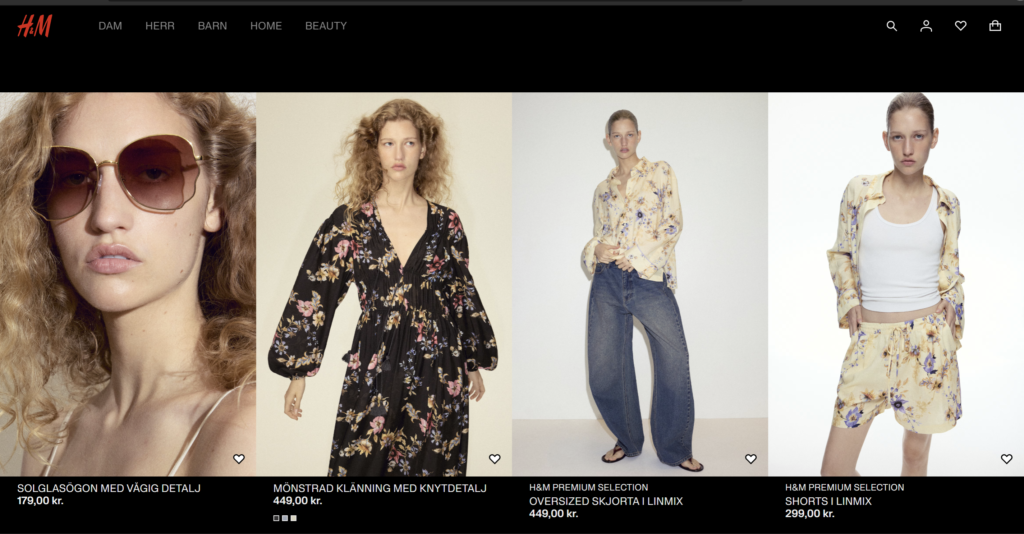
The H&M launch page.

Screenshot of an H&M launch page showing four fashion images with products priced at 179, 449, 449 and 299 Swedish kronor, each displayed with zero decimal places.

On H&M’s Swedish site, products in the same collection were listed at 179 kr, 299 kr and 449 kr. Each price was displayed with ,00, making them look like whole-number prices, but each still sat immediately below a familiar threshold.

This is why charm pricing can’t be reduced to spotting .99. The final decimals are round, while the larger number still stops just short of 180, 300 or 450.

The GoDaddy homepage pop-up.

Screenshot of a GoDaddy pop-up offering a dot-com domain for “just $4.99”, with a promotional code, copy-code button and a dismissal link reading “No thanks, I don't need to save.”

A GoDaddy pop-up offered a .com domain for “just $4.99,” alongside a promotional code and the option to decline with the words, “No thanks, I don’t need to save.”

The price ending is only one part of the message. “Just” makes the amount feel smaller, the code frames it as a special opportunity and the refusal turns closing the pop-up into an admission that we don’t want to save.

This is often how tactics appear in practice, layered together until the interface is doing far more than presenting an offer.

The ASKET permanent collection.

Screenshot of ASKET’s seasonal highlights showing four garments with prices of 1,700 SEK, 450 SEK, 1,800 SEK and 2,000 SEK.

ASKET’s permanent collection uses prices such as 550 SEK, 1,000 SEK, 1,400 SEK and 2,000 SEK. The prices are presented plainly alongside information about the garment’s materials, construction and manufacturing.

The practice isn’t useful because every price ends in zero. The price is allowed to stand as part of the product information, without shaving off a unit to make the amount cross into a lower number.

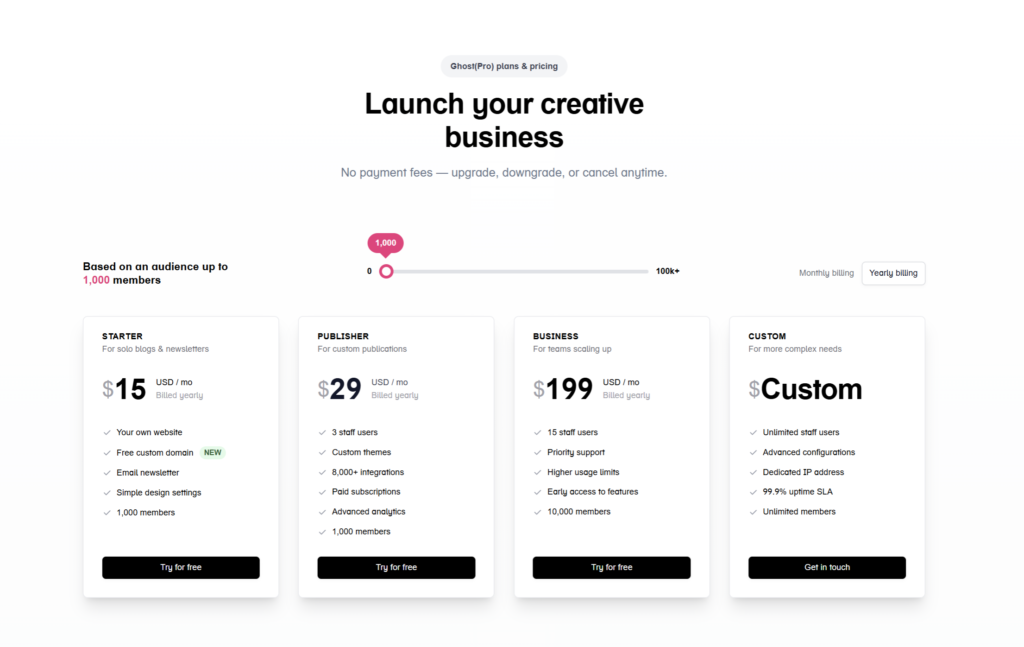
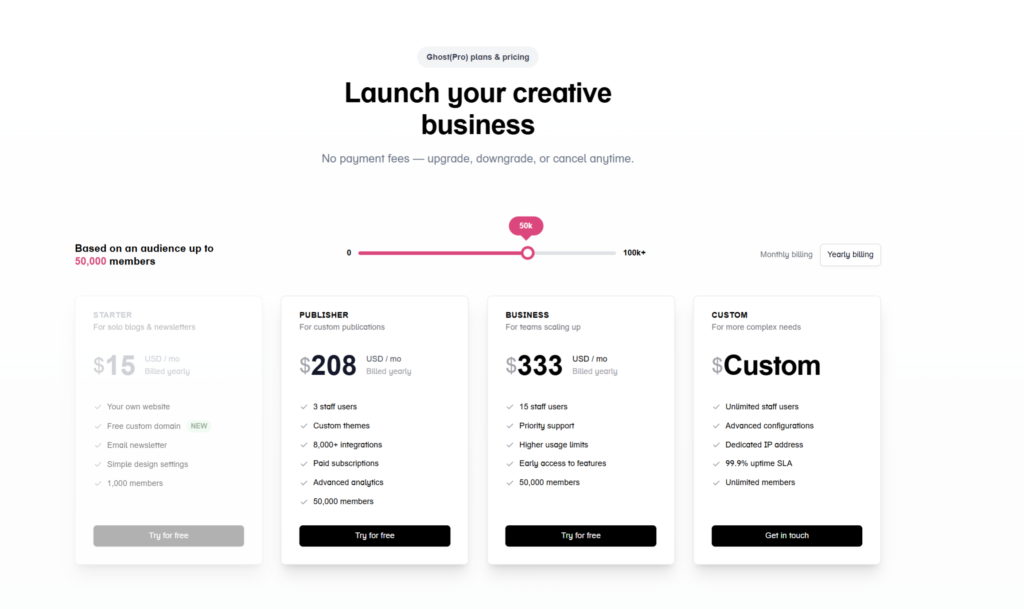
The Ghost pricing page.

Screenshot of Ghost(Pro) pricing set to 1,000 members and yearly billing. A slider shows 1,000 members, and the plan cards list Starter at $15 per month, Publisher at $29, Business at $199 and a custom plan.
Screenshot of the Ghost(Pro) pricing calculator adjusted to 50,000 members. Publisher changes to $208 per month and Business to $333, while Starter is unavailable and the fourth plan remains custom.

Ghost’s hosting price changes with the size of a publication’s audience, so its pricing page lets people enter their expected number of members and see which plans and costs apply. It explains what counts as a member, distinguishes monthly from annual billing and states when an upgrade will become necessary.

Ghost still uses some just-below prices, which is worth acknowledging. Ethical practice isn’t a purity badge, and organisations can make one part of a decision clearer while relying on convention elsewhere.

The calculator is useful because it doesn’t pretend a variable price is simple. It gives people a way to see how the variables affect what they’ll pay before they commit.

How to start

Transparent pricing isn’t one particular number. It’s giving people the information they need to understand, compare and anticipate what they’ll pay.

Sometimes that means using a round price and allowing it to stand behind itself. Sometimes it means showing the total earlier, explaining a renewal, breaking down a cost or building a calculator because the honest answer depends on several variables.

1. Look for the thresholds.

Review the prices you control and notice which ones sit immediately below a round number. Don’t limit the search to .99; look for 199, 2,999 and other prices whose first digit or overall scale would change if they were rounded.

Then ask why they’re there. If the honest answer is “because it makes the price look lower,” you’ve found somewhere to begin.

2. Try the round number.

Show the actual amount you’re asking people to spend without subtracting the smallest possible unit. €20 may look more expensive than €19.99, but it is also quicker to read, easier to remember and closer to the amount someone needs to have available.

This isn’t a rule that every price must end in zero. It’s an invitation to stop treating the lower-looking number as the obvious professional choice.

3. Show the whole price early.

A round number doesn’t help if compulsory fees appear later. Include taxes, setup costs, booking fees, renewal prices and other unavoidable charges as early as you reasonably can.

For subscriptions, show the billing period, the amount charged and what the price becomes after an introductory offer. “€20 per month, billed as €240 annually” gives people information that “from €20” does not.

4. Let people calculate variable costs.

When the price depends on usage, quantity, location, team size or another variable, give people a way to estimate it before they have to register, book a call or hand over their details.

A useful calculator doesn’t merely produce a number. It shows what changed, how the total was reached and what someone will ultimately pay.

5. Explain what the price pays for.

Not every organisation can or should publish a forensic breakdown of every cost, but we can give people enough context to understand the value behind the number.

That might mean explaining the materials, labour, service time, payment structure or choices that make the price what it is. The point isn’t to defend the price. It’s to make the offer easier to assess on its substance.

6. Test understanding, not only conversion.

A pricing experiment can tell us which number produces more sales, but that isn’t the only thing worth learning.

Ask people what they expect to pay, what they think is included, when they expect to be charged and how easily they can compare the options. A pricing page that converts well while leaving people confused hasn’t finished its job.

Your move.

The library is not finished. We want these tactics and flips to come out of the
discussions and experience of the people who use them. Our members can lead what we look at, how we think about it, and where we go next. Join us to participate.

Join the movement
the ethical move

Other tactics + flips

The tactic

Secret recipe

A ‘secret recipe’ is when someone claims they have an exclusive secret to success, or a shortcut, that no one else has. There is no ONE solution to a problem, and claiming that there is creates a sense of lack and loss aversion that are hard to resist.

The flip

Open method

An approach described plainly, without the mystery. Nobody has the only solution to anything, and saying so out loud costs less than it seems.

The tactic

Ethics-washing

Ethical and progressive values appropriated to lift image and sales, while behind closed doors the actions do not match, as when a brand donates to BLM while exploiting BIPOC in its supply chain. It rides on our need to be seen well by our peers, since we buy from companies that make us look good by extension.

The flip

Authentic values

Taking ownership of our organisation’s role in creating positive change. Being transparent about what we are already doing and what we are still working on, as well as how it runs through values, communications, products and operations. When we talk about our values, our ethical stances and our actions, we do it in a way that is truthful and substantiated.

The tactic

Bait and switch

We are led to expect something of value and what arrives does not match, as when a webinar turns into a sales pitch. The bait primes us to receive, so when the value is pulled away we are anxious to fill the gap with almost anything, and quick to feel we owe something back.

The flip

Stated intent

When a pitch is attached to something of value, say so in the invitation and again at the start, so people arrive knowing. Keeping it under about five percent of the time, or moving it into a separate conversation entirely, leaves the value you promised intact.

Follow our moves.

Not ready to pledge? We’ll only use your email for our newsletter. Privacy notice.

Fields with * are required